
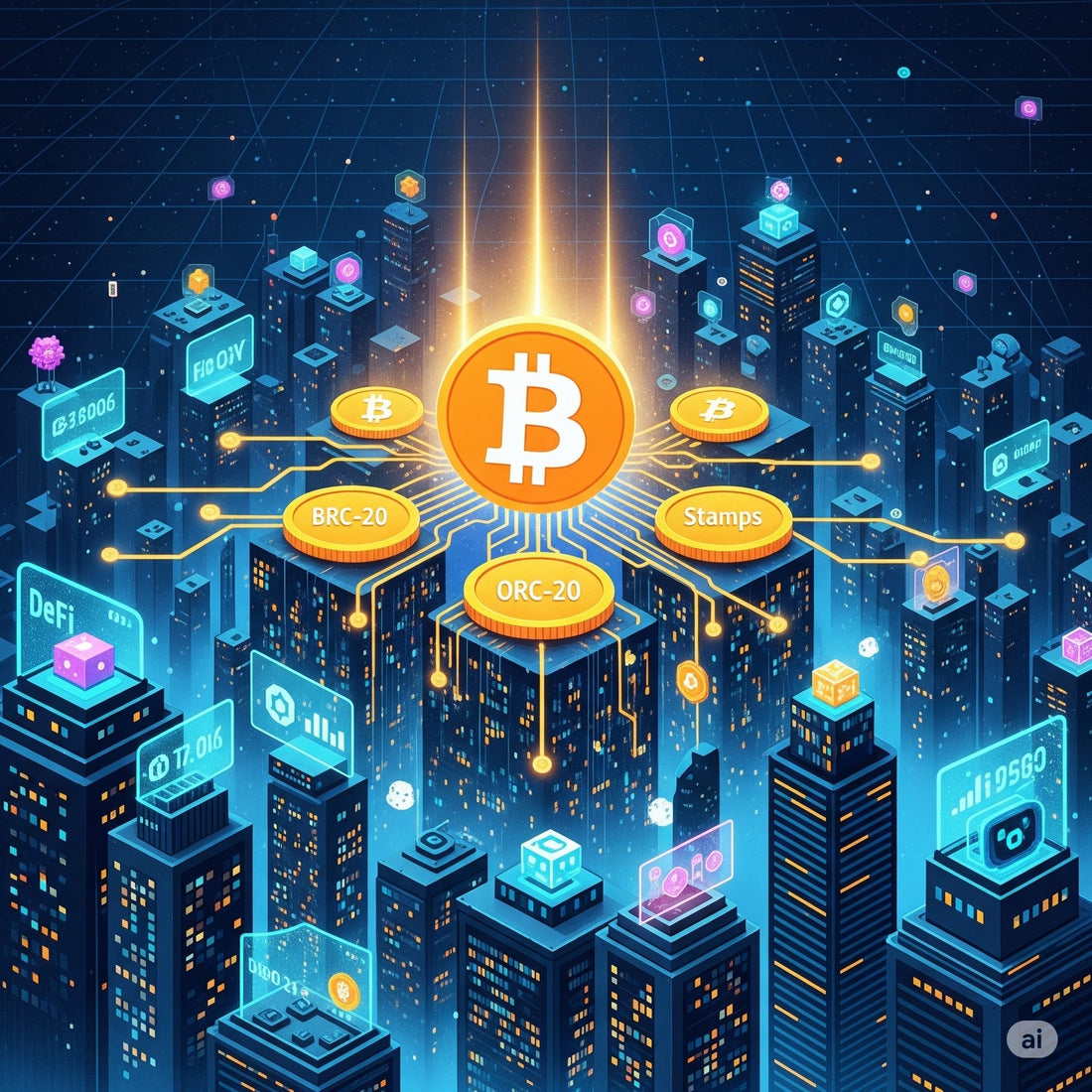
Bitcoin’s Next Evolution: BRC‑20, ORC‑20 & Stamps – The Future of Tokens and NFTs
🚀 Bitcoin’s New Era: BRC‑20, ORC‑20, SRC‑20 (Stamps) & More
1. What’s Happening on Bitcoin?
Bitcoin is no longer just about payments. Over the past two years, new protocols like BRC‑20, ORC‑20, and SRC‑20 (Stamps) have turned the Bitcoin blockchain into a host for tokens, NFTs, and even emerging DeFi use cases. These experiments aim to bring decentralization and asset creation to Bitcoin without relying on Ethereum-style smart contracts.

2. BRC‑20: The Original Fungible Token Standard
Introduced in 2023, BRC‑20 uses the Ordinals protocol to inscribe JSON data on individual satoshis, creating mintable and transferable tokens. It’s simple, but has no smart contract support, so it relies on external indexers to track balances. Popular tokens like ORDI and SATS helped drive early adoption.
- Pros: Bitcoin-native, widely recognized, easy to create.
- Cons: Network congestion, no DeFi features, speculative markets.
3. ORC‑20: A Smarter Upgrade
ORC‑20 improves on BRC‑20 by adding more flexible features:
- Custom token names and supply adjustments.
- Built-in royalty and whitelist functions.
- Uses UTXO-based transfers to avoid double-spending issues.
ORC‑20 remains experimental but aims to build a sustainable, developer-friendly token ecosystem on Bitcoin.
4. SRC‑20 (Stamps): True Immutable Bitcoin NFTs
Unlike regular Ordinal NFTs, which store data in Bitcoin’s witness (prunable) space, SRC‑20 "Stamps" store tiny image files directly inside UTXOs. This means:
- They cannot be pruned or deleted by full nodes.
- They are permanently part of the blockchain.
- They use 24×24 pixel PNG/GIF images, giving a retro collectible vibe.
Stamps trade like NFTs but are harder to support (fewer wallets/marketplaces) and more expensive to mint due to their fully on-chain nature.
5. Why “Prune” Matters
Regular Ordinals can be pruned by nodes, which might erase NFT image data over time. Stamps avoid this risk by storing everything in unprunable transaction outputs (UTXOs). This guarantees that art and tokens truly live on Bitcoin forever, enhancing decentralization and trust.
6. What Does This Mean for Decentralization?
These standards show Bitcoin evolving beyond a payment network into a decentralized platform for art, tokens, and even finance. By avoiding smart contracts, these tools reduce attack surfaces and keep Bitcoin’s base layer simple.
However, challenges remain: high fees, blockchain bloat, and limited tooling could push Bitcoin toward centralization unless solutions like Layer‑2 networks (Lightning, Stacks, Liquid) help scale activity.
7. What’s Next?
- BRC‑2.0 Launch (August–September 2025): A major upgrade promising DeFi features like AMMs, DEXs, and lending—all on Bitcoin.
- Better Wallet Support: More wallets and explorers will integrate ORC‑20 and Stamps.
- Layer‑2 Adoption: Expect migration to Lightning and other solutions for scalability.
Final Thoughts
The Bitcoin network is entering a new experimental phase. If successful, these standards could make Bitcoin the foundation for a decentralized economy of tokens, NFTs, and financial tools. But the space is early—so approach with caution and do your own research.


